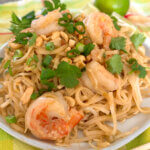
Easy Shrimp Pad Thai
This easy shrimp Pad Thai recipe is made with simple, accessible ingredients and ready in 30 minutes!
Servings 4
Calories 367kcal
Cost $15
Equipment
- Large pot
- Large skillet or Wok
- Strainer
- Long handled tongs
Ingredients
Sauté Ingredients
- 2 TB vegetable oil
- 1 TB coarsely chopped garlic
- 1/3 cup green onions
- 4-8 ounces shrimp peeled and deveined
- 2 cups Mung bean sprouts
- 8 ounces Pad Thai rice noodles
Sauce
- 2-3 TB fish sauce
- 2-3 TB soy sauce
- 2 TB fresh squeezed lime juice
- 2-3 TB sugar white, coconut, or palm sugar
- 2 eggs lightly beaten
Optional Garnishes & Toppings
- 1/4 cup dry roasted peanuts chopped
- lime wedges
- crushed red pepper flakes
- fresh herbs: cilantro, Thai basil, basil
- chopped green onions
- mung bean sprouts
Instructions
Noodle Preparation
- Bring large saucepan of water to a boil, add the noodles and remove pan from heat.
- Let the noodles sit in the hot water for 5 minutes.
- Drain noodles and rinse well in cold water.
- Place the noodles in a medium bowl near the stove so they are ready to use.
Pad Thai Sauce
- Whisk together all liquid ingredients, sugar, and eggs.
- Set near your stovetop until ready to use.
Cooking and Serving Instructions
- In a large deep skillet or wok, heat 2 Tablespoons of oil over medium heat.
- Add the garlic and about half the green onions (white part), toss well, then add the shrimp.
- Cook about two minutes, stirring until shrimp is mostly cooked through.
- Add the sauce and stir until it begins to thicken.
- Add drained noodles and use tongs to toss in the sauce.
- Add the Mung bean sprouts. Gently toss noodles, sprouts, and sauce until all the noodles are coated and the sauce is incorporated and shrimp are cooked through.
- Serve with your favorite garnishes: extra lime juice, green onions, fresh herbs, dry roasted peanuts, crushed chili pepper.
Notes
Nutrition information is provided as an estimate only and may vary with exact ingredients used and serving size.
Prep Tips:
- Protein: While I like to make my Pad Thai with shrimp, you can use the protein of your choice. Some traditional choices are chicken, pork, and tofu. I used shrimp this time. The proteins are cut into small pieces so they cook quickly. If you use a protein that is already cooked, add it when you add the sauce.
- Rice Noodles: Buy rice noodles specifically made for Pad Thai. When you soak them try not to leave them in the hot water longer than the recommended time. If you do, the noodles will be too soft and break up. You can still eat them but they will have a softer texture.
- Mung bean sprouts: While these are served raw much of the time, it’s advisable to give them a short boil before using. I boiled mine for about a minute, drained, and then chilled them. This will hopefully kill any bacteria without ruining the texture. If you are pregnant or have other health concerns, it is recommended that you boil mung bean sprouts before using, if you use at all.
- Fish sauce: This condiment does have a distinct smell. However, it imparts a distinct salty and umami taste to Thai foods. If you don’t have it on hand, you can still make Pad Thai, it will just be a little different and lighter in flavor.
- Sugar: Pad Thai must have some sweetness to taste right. You can use white sugar, coconut sugar, or palm sugar. This recipe calls for 2 Tablespoons but I increased that to 3 Tablespoons.
- Cooking: Granny's recipe was missing the how to cook everything beyond cooking the protein so I tried a couple of different ways. My favorite was just mixing all the liquids and sugar together and adding all at once. Some recipes cook the egg right after the protein.
- Lime juice or rice vinegar: Granny's recipe called for only lime juice and I loved the taste that created. I did make one batch with lime juice and rice vinegar. That tasted great too.
- Garnishes: Garnishes are what will make your Pad Thai amazing. I like to use extra Mung bean sprouts, fresh herbs such as cilantro, Thai Basil, or regular basil, dry roasted peanuts, crushed red chili flakes, and more fresh lime juice. Set these on the side and let everyone dress up their Pad Thai however they like.
- Adjusting Flavor: Once you have the Pad Thai cooked, you can easily add more soy sauce, sugar, or lime to make it to your liking.
Nutrition
Calories: 367kcal | Carbohydrates: 60g | Protein: 16g | Fat: 7g | Saturated Fat: 2g | Polyunsaturated Fat: 2g | Monounsaturated Fat: 3g | Trans Fat: 0.01g | Cholesterol: 127mg | Sodium: 1420mg | Potassium: 327mg | Fiber: 3g | Sugar: 9g | Vitamin A: 214IU | Vitamin C: 8mg | Calcium: 65mg | Iron: 2mg